
Keynote speakers
Nathan Kutz is the Boeing Professor of Applied Mathematics and Electrical and Computer Engineering and Director of the AI Institute in Dynamic Systems at the University of Washington, having served as chair of applied mathematics from 2007-2015. He received the BS degree in physics and mathematics from the University of Washington in 1990 and the Phd in applied mathematics from Northwestern University in 1994. He was a postdoc in the applied and computational mathematics program at Princeton University before taking his faculty position. He has a wide range of interests, including neuroscience to fluid dynamics where he integrates machine learning with dynamical systems and control.
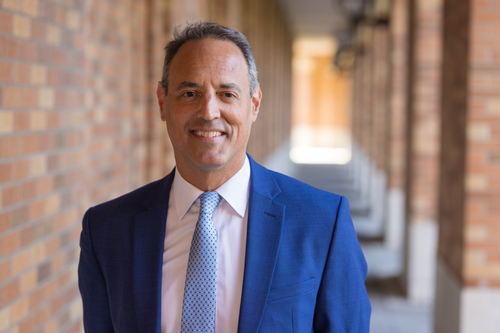
Day 1, 9:30 -10:20 Keynote – Chair EC
(50 minutes, 40 minutes talk, 10 minutes questions)
Closing the gap between simulations and reality
Nathan Kutz, University of Washington
The requirements of modern sensing are rapidly evolving, driven by increasing demands for data efficiency, real-time processing, and deployment under limited sensing coverage. Complex physical systems are often characterized through the integration of a limited number of point sensors in combination with scientific computations which approximate the dominant, full-state dynamics. Simulation models, however, inevitably neglect small-scale or hidden processes, are sensitive to perturbations, or oversimplify parameter correlations, leading to reconstructions that often diverge from the reality measured by sensors. This creates a critical need for data assimilation, the process of integrating observational data with predictive simulation models to produce coherent and accurate estimates of the full state of complex physical systems. We propose a machine learning framework for Data Assimilation with a SHallow REcurrent Decoder (DA-SHRED) which bridges the simulation-to-real (SIM2REAL) gap between computational modeling and experimental sensor data. For real-world physics systems modeling high-dimensional spatiotemporal fields, where the full state cannot be directly observed and must be inferred from sparse sensor measurements, we leverage the latent space learned from a reduced simulation model via SHRED, and update these latent variables using real sensor data to accurately reconstruct the full system state. Furthermore, our algorithm incorporates a sparse identification of nonlinear dynamics based regression model in the latent space to identify functionals corresponding to missing dynamics in the simulation model. We demonstrate that DA-SHRED successfully closes the SIM2REAL gap and additionally recovers missing dynamics in highly complex systems, demonstrating that the combination of efficient temporal encoding and physics-informed correction enables robust data assimilation.
Closing the gap between simulations and reality
Nathan Kutz
The requirements of modern sensing are rapidly evolving, driven by increasing demands for data efficiency, real-time processing, and deployment under limited sensing coverage. Complex physical systems are often characterized through the integration of a limited number of point sensors in combination with scientific computations which approximate the dominant, full-state dynamics. Simulation models, however, inevitably neglect small-scale or hidden processes, are sensitive to perturbations, or oversimplify parameter correlations, leading to reconstructions that often diverge from the reality measured by sensors. This creates a critical need for data assimilation, the process of integrating observational data with predictive simulation models to produce coherent and accurate estimates of the full state of complex physical systems. We propose a machine learning framework for Data Assimilation with a SHallow REcurrent Decoder (DA-SHRED) which bridges the simulation-to-real (SIM2REAL) gap between computational modeling and experimental sensor data. For real-world physics systems modeling high-dimensional spatiotemporal fields, where the full state cannot be directly observed and must be inferred from sparse sensor measurements, we leverage the latent space learned from a reduced simulation model via SHRED, and update these latent variables using real sensor data to accurately reconstruct the full system state. Furthermore, our algorithm incorporates a sparse identification of nonlinear dynamics based regression model in the latent space to identify functionals corresponding to missing dynamics in the simulation model. We demonstrate that DA-SHRED successfully closes the SIM2REAL gap and additionally recovers missing dynamics in highly complex systems, demonstrating that the combination of efficient temporal encoding and physics-informed correction enables robust data assimilation.
Lizzy Cross is a Professor in the Dynamics Research Group at the University of Sheffield, with research interests spanning the fields of structural health monitoring (SHM), machine learning and nonlinear system identification. Most of her research projects focus on the analysis of large datasets from monitored structures, where she employs data-driven algorithms to extract useful information, however, she has recently completed an EPSRC Innovation Fellowship pioneering a physics-informed machine learning approach for these problems. Lizzy is a co-director of the Laboratory for Verification and Validation, a state-of-the-art dynamic testing facility (lvv.ac.uk). She has published over 170 articles, including 50+ journal papers and 8 invited book chapters. She serves as an Associate Editor for the Cambridge Press Data-centric Engineering journal, as well as for the open access journal of Structural Dynamics. She awarded the Achenbach medal which recognises an individual (within 10 years of PhD) who has made an outstanding contribution to the advancement of the field of SHM in 2019.
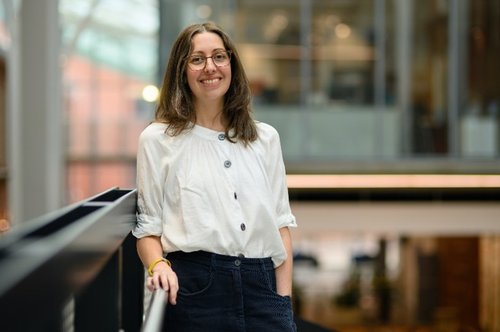
Day 3, 9:30 -10:20 Keynote – Chair AM
(50 minutes, 40 minutes talk, 10 minutes questions)
Probabilistic regime dependent physics-informed machine learning models for structural assessment
Lizzy Cross, University of Sheffield
How much we know about our structures and how they respond to different environments and operating conditions is variable, as too is our confidence in that knowledge. Embedding physics into machine learning algorithms can be helpful in many ways, but not when what we know doesn't generalise across our data and indeed operational envelope. This talk will explore how we can embed differing physical insights into regime dependent and aware algorithms also taking into account variable uncertainty on our assumptions and data.